



AI Cold Calling Reach Report: September 2026 Data
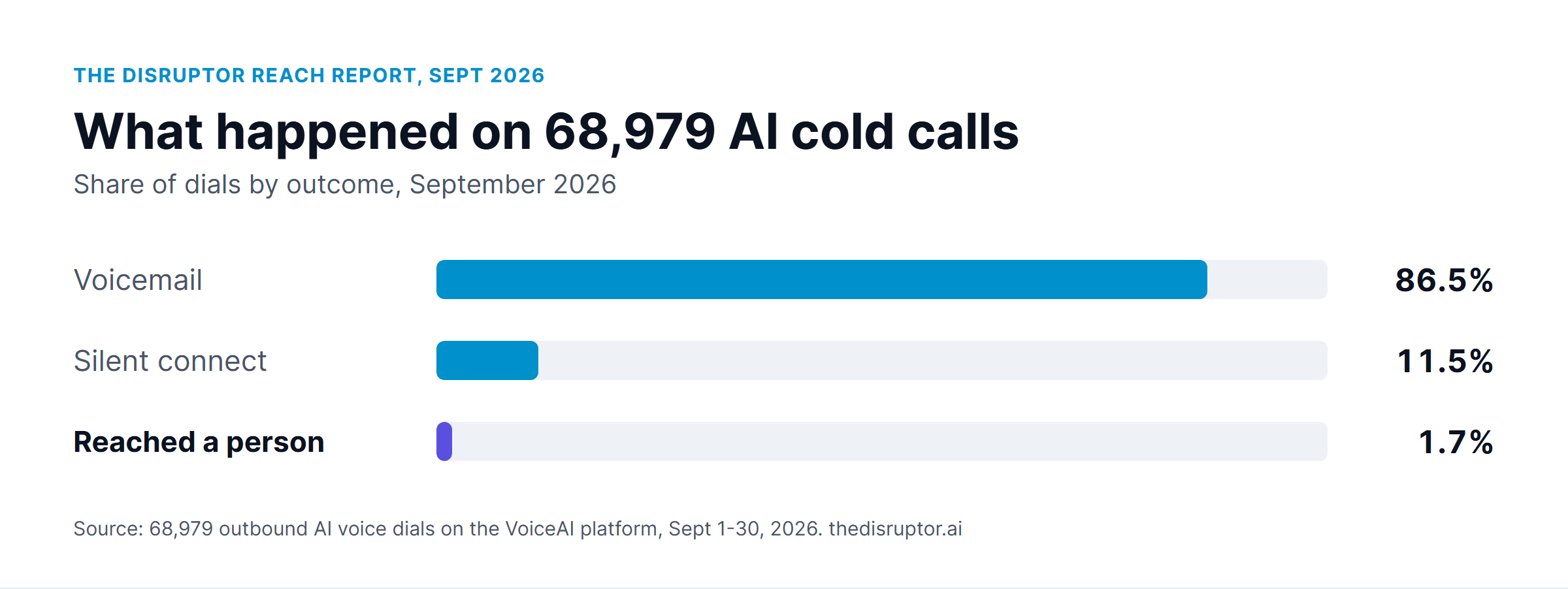
Short answer: in September 2026, 68,979 AI cold calls to real estate contacts reached a live person 1.7% of the time, about 1 in every 58 dials. 86.5% went to voicemail and 11.5% connected to silence. The 4th attempt reached people 1.6 times as often as the 1st, and caller-ID numbers lost about half their reach after four weeks.
This is the first Disruptor Reach Report: real dial data from the VoiceAI platform that runs our done-for-you calling. Low reach is normal for cold outreach, whether a person or an AI is dialing. What matters is which choices move the number, and that is what this report measures.
Key findings
- 1.7% of dials reached a person (1,183 of 68,979). Median conversation: 76 seconds.
- 86.5% voicemail, 11.5% silent connects. Plan the campaign around the 98% who do not pick up.
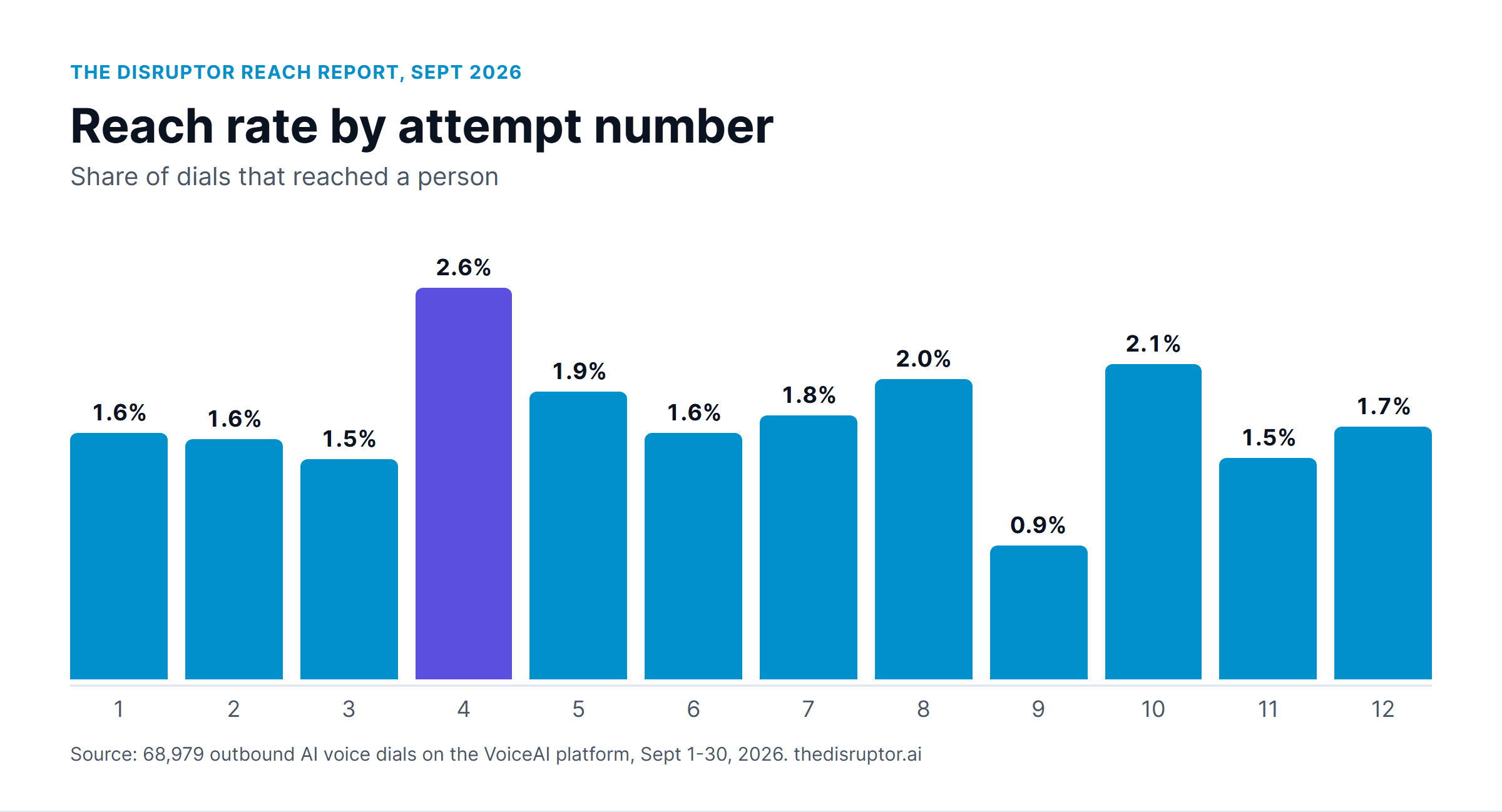
- Attempt 4 had the best reach: 2.6%, against 1.6% on attempt 1. In our dial plan, attempt 4 is usually the first afternoon call.
- 24% of the people we reached picked up on attempt 5 or later. Stop at 4 attempts and you lose about a quarter of your conversations.
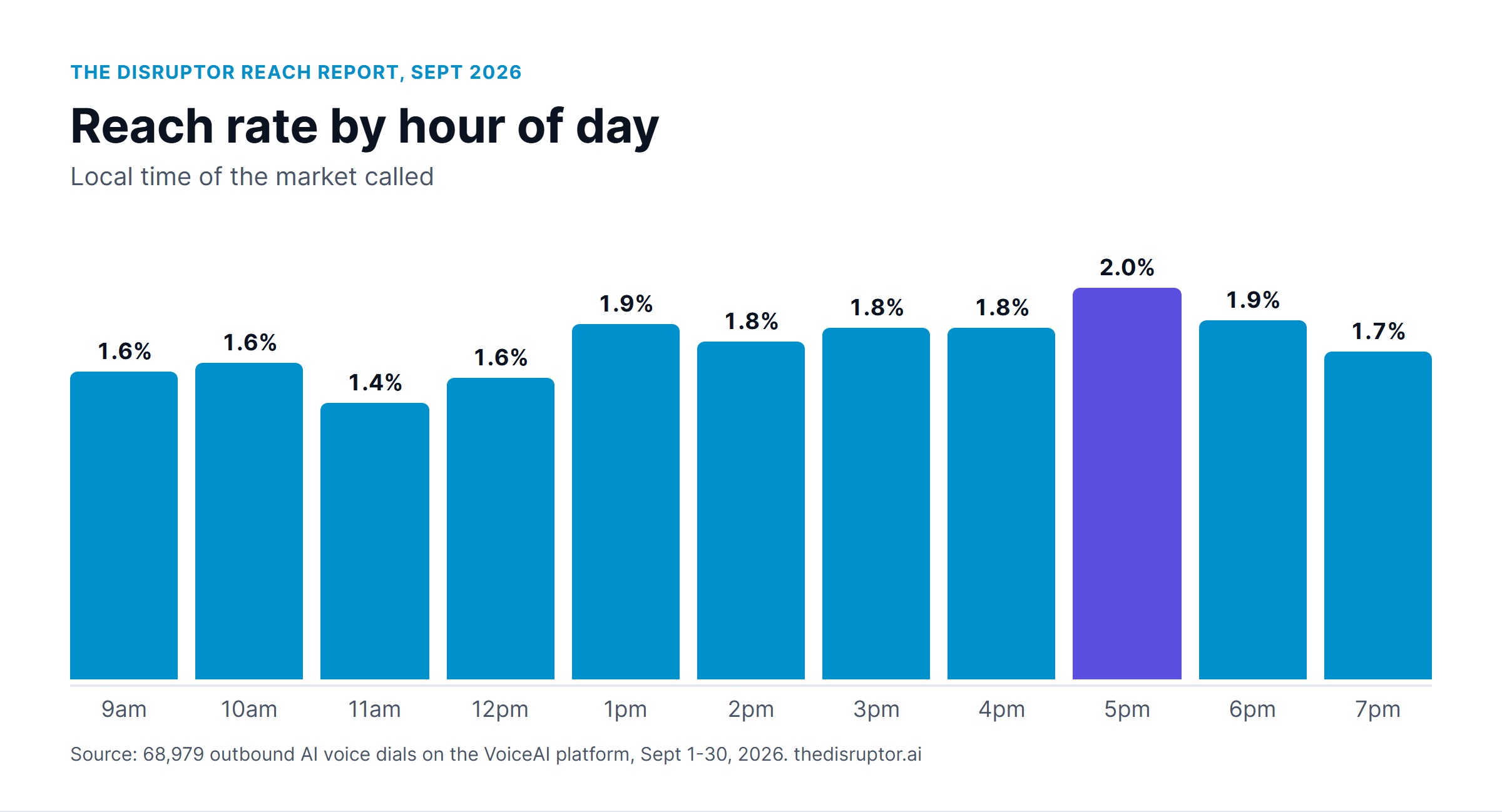
- Late afternoon beat late morning: 2.0% at 5pm against 1.4% at 11am (market local time).
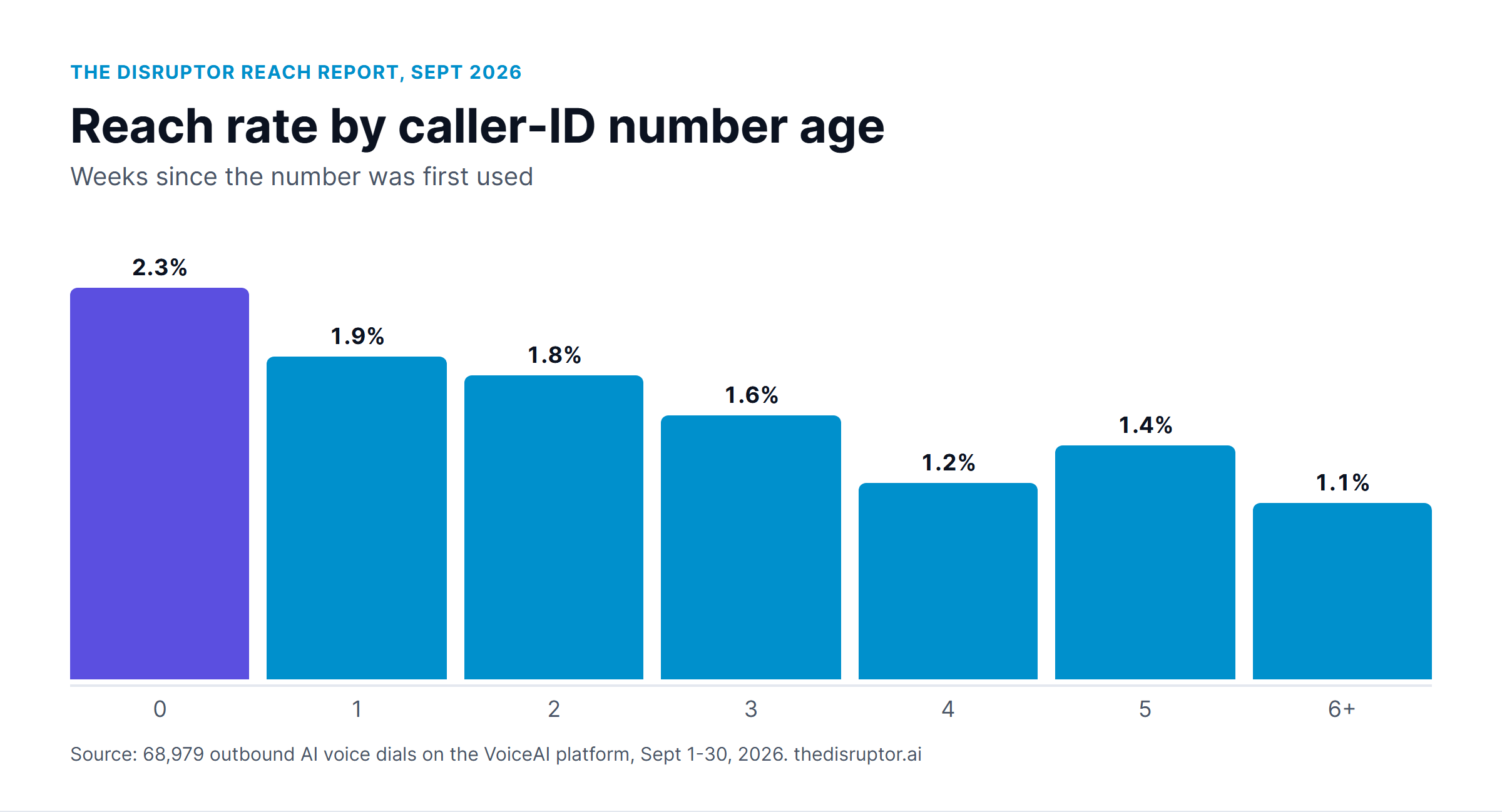
- Caller-ID numbers wear out: 2.3% reach in a number's first week, 1.2% by week 4, 1.1% after week 6.
- Warmer lists reach more people: a real estate team's leads and sphere reached 2.0%, cold homeowner lists for investors 1.7%.
What happened on 68,979 AI cold calls
| Outcome | Share of dials |
|---|---|
| Voicemail (carrier, personal, screener) | 86.5% |
| Silent connect (line opened, nobody spoke) | 11.5% |
| Reached a person | 1.7% |
| Other | 0.4% |
A "connected" call is not a conversation. The phone system marks most of these calls as connected, but a voicemail greeting or an empty line is not a person. If your dialer reports a high connect rate, check how many of those calls have a real two-way transcript.
Reach rate by attempt number
| Attempt | Dials | People reached | Reach rate |
|---|---|---|---|
| 1 | 16,311 | 268 | 1.6% |
| 2 | 17,218 | 274 | 1.6% |
| 3 | 12,619 | 184 | 1.5% |
| 4 | 6,457 | 168 | 2.6% |
| 5 | 5,338 | 102 | 1.9% |
| 6 | 4,392 | 72 | 1.6% |
| 7 | 2,459 | 43 | 1.7% |
| 8 | 1,759 | 35 | 2.0% |
| 9 to 12 | 2,426 | 37 | 1.5% |
Reach does not fall off after the first few tries. Attempts 5 through 8 reached people about as often as attempts 1 through 3. Attempts 9 to 12 have smaller samples (about 500 to 700 dials each), so read them as a range rather than a trend.
When people were finally reached
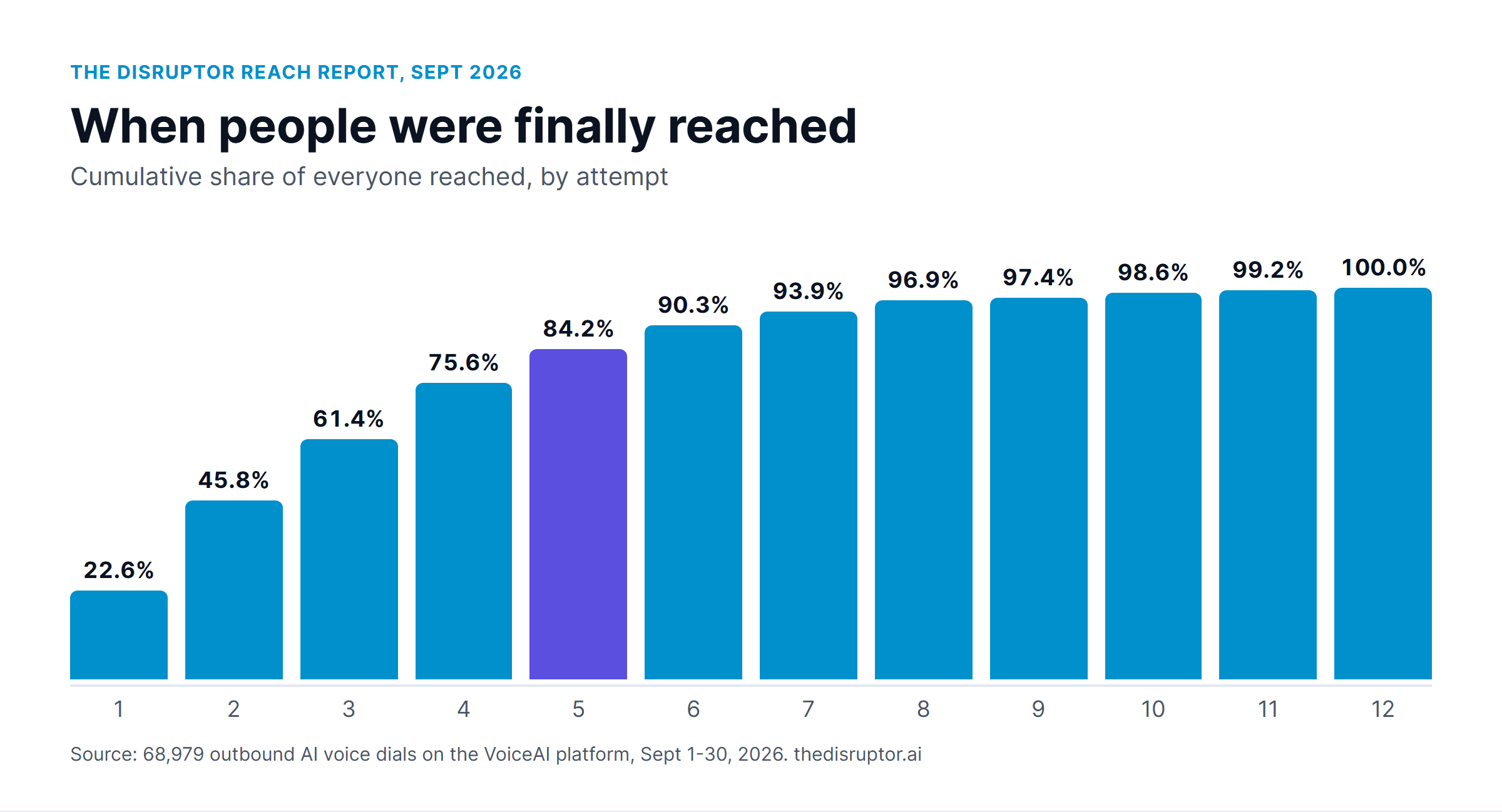
Of everyone the AI reached in September, 46% picked up on attempt 1 or 2, 76% by attempt 4, and 97% by attempt 8. The last quarter of conversations came from attempt 5 onward.
Reach rate by hour of day
| Local hour | Dials | Reach rate |
|---|---|---|
| 9am | 6,014 | 1.6% |
| 10am | 10,273 | 1.6% |
| 11am | 10,103 | 1.4% |
| 12pm | 8,192 | 1.6% |
| 1pm | 6,381 | 1.9% |
| 2pm | 4,707 | 1.8% |
| 3pm | 3,983 | 1.8% |
| 4pm | 3,339 | 1.8% |
| 5pm | 6,569 | 2.0% |
| 6pm | 7,415 | 1.9% |
| 7pm | 1,866 | 1.7% |
Most dialing happens in the morning, but reach was higher every hour from 1pm to 6pm. By weekday, reach ran from 1.5% (Saturday) to 2.0% (Wednesday). Sundays are not dialed.
Reach rate by caller-ID number age
| Weeks since first use | Dials | Reach rate |
|---|---|---|
| 0 | 10,500 | 2.3% |
| 1 | 11,142 | 1.9% |
| 2 | 10,199 | 1.8% |
| 3 | 7,587 | 1.6% |
| 4 | 4,004 | 1.2% |
| 5 | 2,875 | 1.4% |
| 6 and later | 1,904 | 1.1% |
Across 19 high-volume caller-ID numbers, reach in a number's first week was about double its reach a month later. A likely reason: carriers and call-labeling apps flag numbers that place many short calls, and people stop answering them.
How to beat 2%: what the data supports
- Plan for at least 6 to 8 attempts per contact. A quarter of conversations came on attempt 5 or later.
- Put an afternoon call in every sequence. Attempt 4, usually the first afternoon slot, had the best reach, and 1pm to 6pm beat the late morning.
- Rotate caller IDs on a schedule. Reach roughly halved by week 4, so plan for fresh, properly registered numbers about monthly instead of burning a few.
- Design for the 98%. Nearly every dial ends in voicemail or silence, so the voicemail message and the follow-up after a missed call do most of the work.
- Measure conversations, not connects. Count calls where a person actually talked, not calls the phone system marked as connected.
If you want this run for you, from list to booked appointments, The Disruptor AI's done-for-you team can set it up. For the cost side of the same question, see the AI cold calling service page and our cold calling cost breakdown.
Method
Data: every outbound AI voice dial on the VoiceAI platform from September 1 to 30, 2026 (Eastern), after removing test calls, inbound calls, and calls to clients' own numbers. That is 68,979 dials for four real estate businesses: three investors calling homeowner lists and one real estate team calling its leads and sphere.
Reached a person: the call transcript shows at least two replies from the contact of three or more words each, none matching voicemail, call-screener, or machine phrasing. This test is strict. A person who says one short sentence and hangs up is not counted.
Hour and weekday use the local time of the client's market. Caller-ID age counts weeks since a number's first outbound dial from July 1, for numbers with 2,000 or more dials.
Limitations: one month, one platform, mostly real estate seller outreach. Attempt number, hour, and number age overlap, so treat each as a pattern, not an isolated cause. July and August are not included: a different voice agent with known dead-air defects ran those months, and one dial route stored the conversation separately from the dial. Every published figure covers at least 500 dials. No client names, phone numbers, or call content are published.
Download the data and cite this report
The aggregate dataset is free to use with attribution: reach-report-2026-09 dataset (CSV).
Cite as: The Disruptor AI, "AI Cold Calling Reach Report: September 2026", thedisruptor.ai/post/ai-cold-calling-reach-report-2026. We plan to publish this report every quarter.
By Kalib Geiger, founder of The Disruptor AI. Kalib builds and runs AI calling and follow-up systems for real estate investors, agents, and service businesses.


